What is a 3D Printer? A Beginner’s Guide to the Future of Manufacturing.
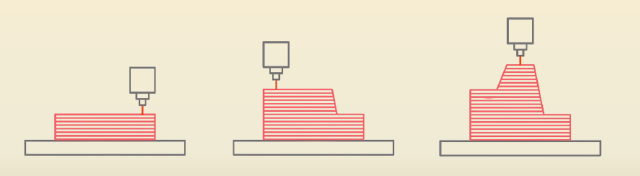
A 3D printer is a machine that creates three-dimensional objects by adding material layer by layer, following a digital design. This process is known as additive manufacturing.3D printing is a form of additive manufacturing technology where a three-dimensional object is created by laying down successive layers of material. It is also known as Additive manufacturing.
3D printing is achieved using an additive process, where successive layers of material are laid down in different shapes.
3D printing is a form of additive manufacturing technology where a three-dimensional object is created by laying down successive layers of material.
It is also known as Additive manufacturing. 3D printing is achieved using an additive process, where successive layers of material are laid down in different shapes
How It Works
The process typically follows these three main steps:
- Digital Design: You first create a 3D model using CAD Software (SolidWorks, CATIA V5, NX12 etc.) or find a pre-made design online in formats like STL.
- Slicing: Specialized software called a slicer divides the 3D model into hundreds of thin horizontal layers and generates “G-code,” which tells the printer exactly how to move.
- Printing: The printer follows the G-code to deposit or solidify material—such as plastic, resin, or metal—one layer at a time until the final shape is formed.
A Beginner’s Guide to the Future of Manufacturing.
Manufacturing is undergoing a massive transformation, moving from noisy, manual factories to intelligent, connected, and eco-friendly ecosystems. This evolution is primarily driven by Industry 4.0, the fourth industrial revolution, which integrates digital technology directly into the production process.
What is a 3D Printer? A Beginner’s Guide to the Future of Manufacturing
Core Technologies Shaping the Future
- Artificial Intelligence (AI): Used for predictive maintenance (fixing machines before they break) and automated quality control to spot defects instantly.
- Industrial Internet of Things (IIoT): Sensors embedded in equipment collect real-time data, allowing machines to “talk” to each other and to managers.
- Additive Manufacturing (3D Printing): Enables mass-customisation by printing parts directly from digital files, reducing the need for large physical inventories.
- What is a 3D Printer? A Beginner’s Guide to the Future of Manufacturing
- Advanced Robotics & Cobots: Collaborative robots (cobots) work alongside humans, handling repetitive or dangerous tasks while allowing workers to focus on complex problem-solving.
- Digital Twins: Virtual clones of physical machines or entire factories that allow for testing and simulation without disrupting real-world production.
Common Types of 3D Printers
There are several technologies used today, but these three are the most common:
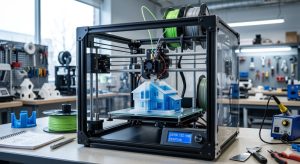
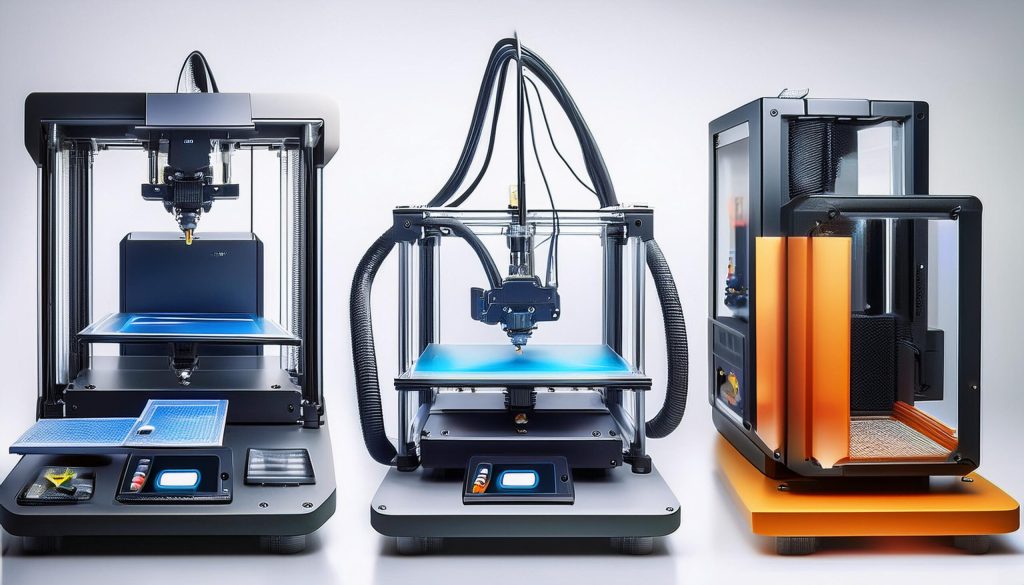
- FDM (Fused Deposition Modeling): The most popular and affordable type for beginners. It works like a high-tech glue gun, melting a plastic string (filament) and squeezing it through a nozzle.
- SLA (Stereolithography): This type uses a high-precision laser or UV light to harden layers of liquid resin. It is ideal for objects with very fine details and smooth finishes.
- What is a 3D Printer? A Beginner’s Guide to the Future of Manufacturing
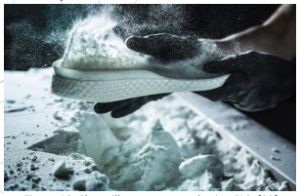
- SLS (Selective Laser Sintering): Often used in industrial settings, it uses a powerful laser to fuse together small particles of polymer or metal powder.
What Can You Make?
3D printing is used for everything from simple household items to life-saving medical devices:
- Everyday Items: Phone stands, cable organizers, custom keychains, and kitchen gadgets.
- Healthcare: Personalized prosthetics, dental models, and even experimental bioprinting of tissues.
- Industry: Aerospace parts, automotive prototypes, and Cad Scale models.
- What is a 3D Printer? A Beginner’s Guide to the Future of Manufacturing
- Creative Projects: Intricate jewelry, toys, movie props, and artistic sculptures
How 3D Printing Works
- Digital Blueprint: You design a 3D model using Computer-Aided Design (CAD) software.
- Slicing: Special software cuts the digital model into thousands of thin horizontal layers.
- Layered Assembly: The printer reads the slices and deposits material layer by layer until complete
Common Types of 3D Printers
- FDM (Fused Deposition Modeling): Melts plastic filament and pushes it through a hot nozzle. Most common and affordable type.
- SLA (Stereolithography): Uses a laser beam to cure liquid resin into solid plastic. Known for high detail.
- SLS (Selective Laser Sintering): Fuses powdered materials (like nylon or metal) using a powerful laser. Used mainly in industries.
Popular Printing Materials
- PLA Plastic: Biodegradable, easy to print, and ideal for beginners.
- ABS Plastic: Strong, impact-resistant, and commonly used for LEGO bricks.
- PETG: Combines the ease of PLA with the strength of ABS.
- Resin: Liquid material used for highly detailed miniatures and jewelry
Key Advantages over Traditional Manufacturing
- Zero Waste: Traditional machining cuts away material (subtractive). 3D printing only uses the exact amount of material needed (additive).
- Infinite Complexity: Traditional molds cannot easily make hollow spheres or interlocking gears. 3D printers can build almost any shape.
- On-Demand Production: Companies do not need massive warehouses for spare parts. They can just store digital files and print parts when they break.
The Printing Process in Action
- Bed Leveling: The printer bed must be perfectly flat so the first layer sticks properly.
- Support Structures: If a model has an overhang (like a statue with outstretched arms), the printer builds temporary plastic pillars to hold it up.
- Post-Processing: Once printed, objects often need cleaning, support removal, sanding, or painting.
Lesser-Known Materials
- Wood & Metal Filaments: Plastic mixed with real wood fibers or metal powders for a unique look and weight.
- TPU (Flexible): A rubber-like material used for phone cases, shoe soles, and wearable items.
- Chocolate & Food: Special printers use edible pastes to create custom cake decorations and intricate candies.
Future Innovations
- Bioprinting: Scientists are experimenting with printing living tissues and organs using cellular bio-inks.
- Construction: Giant concrete 3D printers can build the walls of a house in less than 48 hours.
- Space Exploration: NASA uses 3D printers on the International Space Station to manufacture tools on demand.
Engineers are shrinking 3D printers to a microscopic scale using a technology called Two-Photon Polymerization.
- Medical Micro-bots: Scientists will be able to 3D print tiny, microscopic robots smaller than a single human cell.
- Targeted Treatment: These micro-bots can be injected into the human bloodstream to navigate through veins, deliver cancer medication directly to specific tumor cells, or clear blocked arteries without surgery.
Car manufacturing is moving away from assembly lines to complete digital customization.
- Supercars Built in Hours: Companies are already using massive metal 3D printers to print entire car chassis and engine blocks as single, lightweight pieces.
- Safer Designs: Because 3D printers can create organic, complex structures resembling bird bones, future cars will be significantly lighter, vastly more fuel-efficient, and much safer during crashes due to custom crumple zones.