

Properties of Plastic
- STRENGTH
- WEATHER RESISTANCE
- FIRE RESISTANCE
- DURABILITY
- DIMENSIONAL STABILITY
- CHEMICAL RESISTANCE
- THERMAL RESISTANCE
- WORKING CONDITIONS
- MOISTURE RESISTANCE
- DUCTILITY
- MISCELLANEOUS PROPERTIES
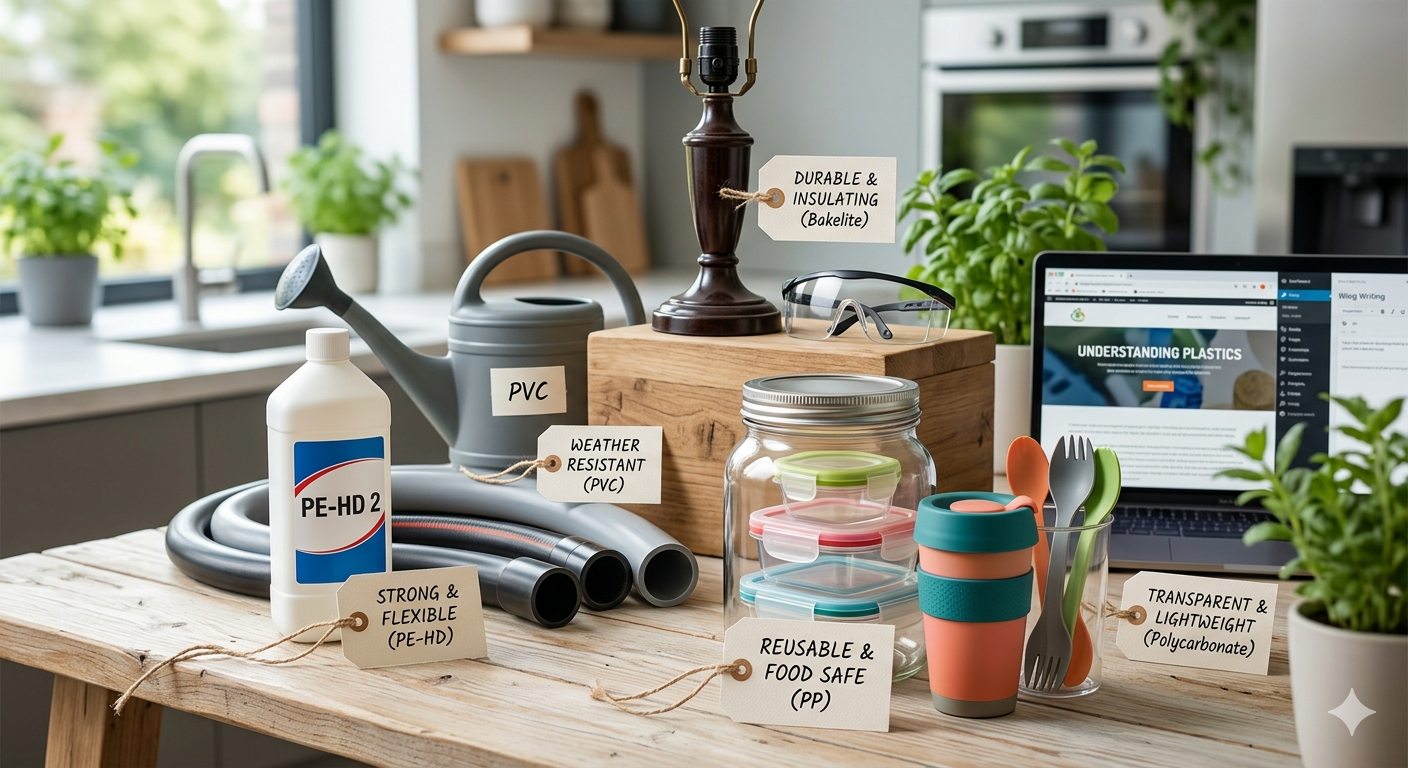
Following are the general properties of plastics.
1.STRENGTH
- The plastics are sufficiently strong and can be used for load bearing structural members. The strength of plastics can further be increased by reinforcing them with various fibrous materials. Plastic as structural material has not gained much popularity because of the following resins.
- High cost of construction
- High temperature susceptibility
- Poor stiffness
- Being subjected to creep under constant load.
2. WEATHER RESISTANCE
The plastics, prepared from phenolic resins, are only good in resisting weather effects. Certain plastics are seriously affected by ultraviolet light.
3. FIRE RESISTANCE
Plastics, being organic in nature, are combustible. But the resistance to fire temperature depends upon the plastic structure.
- Cellulose acetate plastics burn slowly.
- Polyvinyl chloride (PVC) plastics are non-inflammable.
- Phenol formaldehyde and urea formaldehyde plastics are used as fire proofing materials.
4. DURABILITY
Plastics generally possess sufficient durability, provided they offer sufficient surface hardness. Thermoplastic varieties are found to be attacked by termites and rodents.
5. DIMENSIONAL STABILITY
Plastics easily maintain its shape and do not go under plastic deformations.
6. CHEMICAL RESISTANCE
Plastics offer great resistance to moisture, chemicals and solvents. Many plastics are found to possess excellent corrosion resistance. Plastics are used to convey chemicals.
7. THERMAL RESISTANCE
The plastics have low thermal conductivity and therefore foamed or expanded varieties of plastics are used as thermal insulators.
8. WORKING CONDITIONS
All operations like drilling, sawing, punching, clamping etc are carried out easily on plastics, just like wood.
9. MOISTURE RESISTANCE This property depends upon variety of plastics used, for example, cellulose plastics are considerably affected by the presence of moisture, whereas polyvinyl chloride plastics offer high resistance to moisture.
10. DUCTILITY Plastics, generally, have low ductility and hence plastic structural members may fail without prior warning.
11.MISCELLANEOUS PROPERTIES In addition to above properties, plastics have following qualities.
- In addition to above properties, plastics have following qualities.
- Plastics are available in variety of coolers, both opaque and transparent.
- Plastics possess excellent insulating property, so used as electric insulators.
- Plastics are clean, light and shining, so they need not be given any finish such as painting, polishing etc.
- Normally thermo-plastics have low melting point and cannot be used where temperature or heat condition persists.
- They possess good optical and sound absorption qualities.
Plastic is everywhere because it is incredibly cheap to manufacture, highly durable, and uniquely versatile, meaning it can be molded into virtually any shape for any industry. However, these exact benefits have created a global environmental crisis. Because plastic does not biodegrade, every piece ever made still exists in some form, breaking down into microscopic particles that have now infiltrated our ecosystems, food chains, and bodies.
Why Society Adopted Plastic So Heavily
- Economic Advantage: Plastic is dramatically cheaper to produce than alternative materials like wood, glass, or metal.
- Material Properties: It is lightweight, shatterproof, flexible, and serves as an excellent insulator for heat and electricity.
- Preservation of Resources: Early synthetic plastics like Bakelite were initially praised for saving wildlife by replacing natural materials like ivory tusks and tortoise shells.
- Convenience Culture: The rise of single-use items—like water bottles, plastic bags, and food packaging—prioritised immediate convenience over long-term sustainability.
Why It Spreads Everywhere in Nature
- Virtually Indestructible: Instead of rotting or decomposing naturally, plastic undergoes photo-degradation from sunlight. This process simply breaks it into smaller and smaller pieces called microplastics and nanoplastics.
- Natural Conveyor Belts: Rain, wind, and stormwater runoff wash land-based litter into local streams and rivers. These waterways act as highways, carrying millions of tonnes of plastic directly into the world’s oceans every year.
- Atmospheric Travel: Lightweight plastic microfibres from synthetic clothing and degraded trash enter the air currents. They travel through the atmosphere, falling back down via rain and snow even in remote areas like the Arctic or uninhabited islands.
- Systemic Waste Failure: Globally, United Nations Development Programme data shows that less than 10% of plastic waste is successfully recycled, leaving the remaining 90% to accumulate in landfills or leak directly into nature.
The Structural Infiltration of Our Daily Lives
- Plasticulture: Modern agriculture relies heavily on plastic films, irrigation pipes, and seed coatings, making plastic a functional, permanent component of global farming soil.
- The Food Chain: Marine life and birds mistake tiny plastic pieces for food. Once consumed, these particles and their toxic chemical additives travel directly up the food chain into human diets.
- Human Bioaccumulation: Scientists have documented microplastics inside human blood, lung tissue, organs, and even the brain, primarily entering our bodies through the air we breathe and the food and bottled water we consume.
1. The Mariana Trench (Deep-Sea Microplastics)
The lowest point on Earth is not immune to human pollution. Scientists exploring the Challenger Deep—nearly 11 kilometres below the ocean surface—discovered synthetic microfibres inside the guts of endemic, shrimp-like amphipods. Even in total darkness and under crushing pressure, human-made polymers have become a primary feature of the deep-sea ecosystem. [1, 2]
2. “Plastiglomerate” (The Birth of New Rock)
In 2014, geologists on Hawaii’s Kamilo Beach officially classified a brand-new type of rock: plastiglomerate. This material forms when volcanic heat or campfires melt plastic debris, binding it together with natural sand, shells, basalt, and coral. It serves as a literal, permanent geological marker of the human era.
3. Plastic Rain in Pristine Wilderness
Atmospheric scientists studying remote, high-altitude wilderness areas in the American Rocky Mountains expected to find pristine rainwater samples. Instead, they discovered that over 90% of their samples contained microscopic plastic threads, beads, and shards. Plastic has officially entered the global water cycle, falling from the sky like rain.
4. Plastisphere (A New Marine Ecosystem)
Millions of tonnes of floating ocean plastic have created an entirely new ecological habitat called the plastisphere. This human-made ecosystem consists of microbial communities, fungi, and tiny marine organisms that thrive exclusively on floating debris, hitchhiking across entire oceans to colonise areas where they do not naturally belong.
5. Extreme Bioaccumulation
Because plastic is everywhere, it has penetrated the most sensitive biological systems on the planet:
- The Human Brain: Recent autopsies have revealed microplastics embedded deep within human brain tissue, crossing the blood-brain barrier.
- Human Placentas: Studies have detected microscopic plastic fragments in every tested human placenta sample, meaning babies are exposed before birth.
- Avian Nests: Certain seabird species now build nests composed almost entirely of colorful plastic fishing lines and wrappers instead of twigs and seaweed.


https://shorturl.fm/yOmY4
https://shorturl.fm/6r96s